
THE KID SEEING HOUSTON DIFFERENT
It all begins with an idea.
Mariano’s World Is Loading
INTERVIEW BY: EMILY ARAUZA
NOVEMBER 10th, 2025
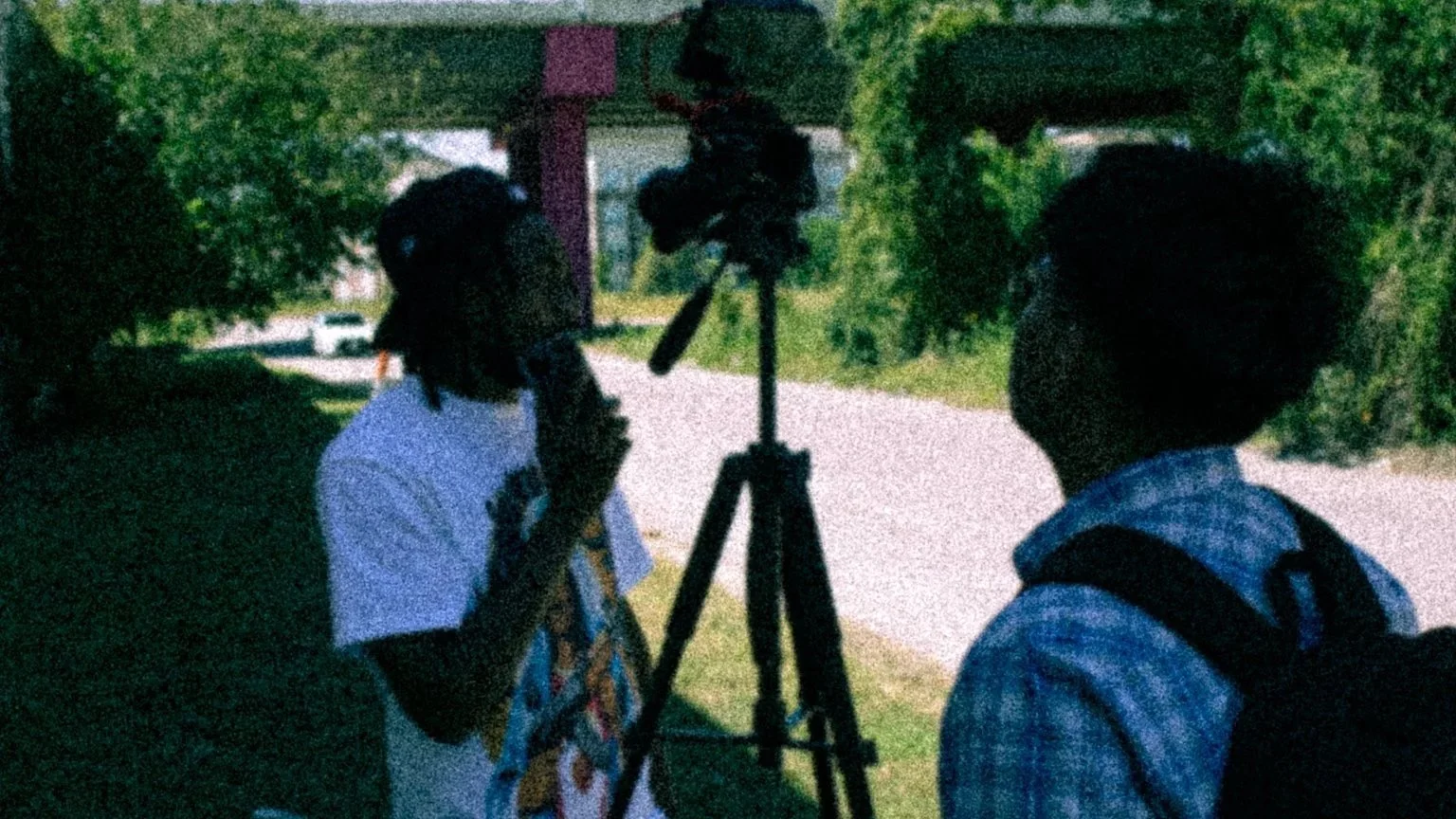
Every city has a kid who sees the world differently. In Houston, that’s Mariano Montanez. Seventeen, camera in hand, and very clearly already moving with purpose. Unlike most, you’ll see in this interview how he's not trying to follow a lane, he’s building one. Shooting fashion, shooting underground shows, learning the craft by actually doing it, & not waiting on anybody to tell him how it’s supposed to look.
This interview is just Mariano telling his truth. Where he came from, what shaped him, & where he knows he’s headed.
Mariano Montanez: “My name is Mariano Montanez. I’m a 17-year-old videographer and photographer based in Houston, Texas. I shoot more brand fashion content and underground Houston concerts.”
Emily Arauza: “Shooting both brand fashion content and underground Houston concerts sounds amazing. When did you start getting into videography and photography?”
MM: “I first started getting into photography and videography when I was around 13–15 years old, but never had a camera until about a year ago. I always loved watching movies and was fascinated by the way things were shot and how the directors captured emotion. A little over a year ago my aunt gave me her old camera. It was a Canon M50 that only had a 50mm lens on it, and I took it to a show. It was Dom Corleo. I took my first ever pictures with it. From that moment I realized I love doing this. I went home and made a photography account to post the pictures. That’s when the start of Directbynano began. After that show I was stuck. I didn’t know how to use my camera or what to shoot. Then my friend Chris asked me, "Why don’t you come shoot for the football team?" So I did, and from then I learned my camera and all its settings, making me even more in love with the art. Then came a show I wanted to go to. It was Swapa opening for Homixide Gang. I went to this show and met Alexander Eltassi (Unified Atlantic), where he got my camera in after I was denied entrance with it. After that I took photos for Swapa, which helped me gain media for Yhapojj, which then put me a bit on the map with the host of that show, Trvpdinero, which then let me shoot for Summrs both in Houston and Dallas. After both of those, I reached out to Alex again and he let me shadow him in a few projects he directed. From that I learned how to shoot my videos, how to capture the shot. I really have him to thank for a lot of my video work. He’s really an inspiration to me and I really enjoy his work.”
EA: “It’s clear how much passion you have for the art and how far you’ve come since then. What was the biggest lesson you learned from those early experiences shooting concerts and football games?”
MM: “The biggest lesson I’ve learned is just not to be confined by rules. In photography there’s a rule about not keeping your ISO too high or not using a certain shutter speed, but I think you should shoot the way you want to. You shouldn’t let things keep you limited and should always try and experiment with different things.”
EA: “That’s a great mindset. I like how you’re not afraid to break the rules and create your own style. It really shows confidence in your vision. Who would you say inspires your work the most?”
MM: “I can’t really pick one person who inspires my style the most. It comes down to three people. Max Dur, Unified Atlantic, and Oakmob. I’ve always loved their work and tried to build off theirs, creating my own spin of it. I really enjoy their work.”
EA: “I can definitely see how each of them could shape different parts of your style. What specifically about their work stands out to you, like is it the way they frame emotion, their color grading, or the energy they capture?”
MM: “The energy and emotion, as well as the edits that they have. I feel like it stands out from everyone else and I really admire that.”
EA: “That makes sense. When you’re behind the camera, what do you try to make people feel when they see your photos or videos?”
MM: “When I’m behind the camera, I want people to see the emotion of the shot, like the tone of the event. Especially when it comes to concert videography, like with this recent one that I just did for Yhappojj. I want them to see what it’s like to see Yhappojj live in Houston, to showcase the emotion. This goes as well with pictures. I love trying to show a story with my pictures.”
EA: “How do you usually prepare for a shoot like that, especially concerts where everything’s moving fast and unpredictable?”
MM: “The way I prepare is I always have a shot list, like getting a shot of the crowd, the artist before the show and after, as well as fan interactions and hype parts of the show as well. I like being prepared so I’m not overwhelmed.”
EA: “I love that approach. It shows your professionalism and attention to detail. Looking ahead, what do you want this to grow into? Like where do you see your photography and videography taking you in the future?”
MM: “I want to be one of the greats. I want people to see my work and know it’s my work, sort of how you see a Tarantino film and know it’s a Tarantino film or a Wes Anderson film and know he made it. I want my work to speak for itself. I see myself being up there with my idols and growing in success. I don’t see an endpoint in my career. I want to grow and grow. I want to learn everything there is about this.”
EA: “That actually sounds kind of similar to something Timothée Chalamet once said. It’s really cool that you think that way. What are some things you’re doing now to work toward that goal?”
MM: “What I’m doing right now to achieve that goal is trying to get my name out there. I hope that by taking on projects with well known people like Yhapojj and others, people will start to see my vision.”
EA: “So building connections and letting your work speak for itself is how real recognition starts. What’s one piece of advice someone’s given you that’s really stuck with you along the way?”
MM: “Not only in my career but as a person, I lacked the ability to see my own worth in my work and talents. The advice I was given was to understand my value in myself as well as my craft, which gave me the ability to learn to distance myself from people stopping me from growing or to pull myself out of being complacent. It got me to grow not just as a person but as a creative.”
EA: “It’s crucial though that you learned what you did and you didn’t let that obstacle hinder you. My final question for you is, what advice do you have to give to anyone who wants to do what it is you’re doing now?”
MM: “You don’t need the best gear to be good. You can create art out of anything. Don’t let others bring you down and never compare someone else’s success to yours. Everyone grows at their own pace and your time will come.”